09:00 — Study & Focus
Field Office
Quiet music to work to. Two rooms in the same studio at different hours.
09:00 — Study & Focus
Quiet music to work to. Two rooms in the same studio at different hours.
01 Releases
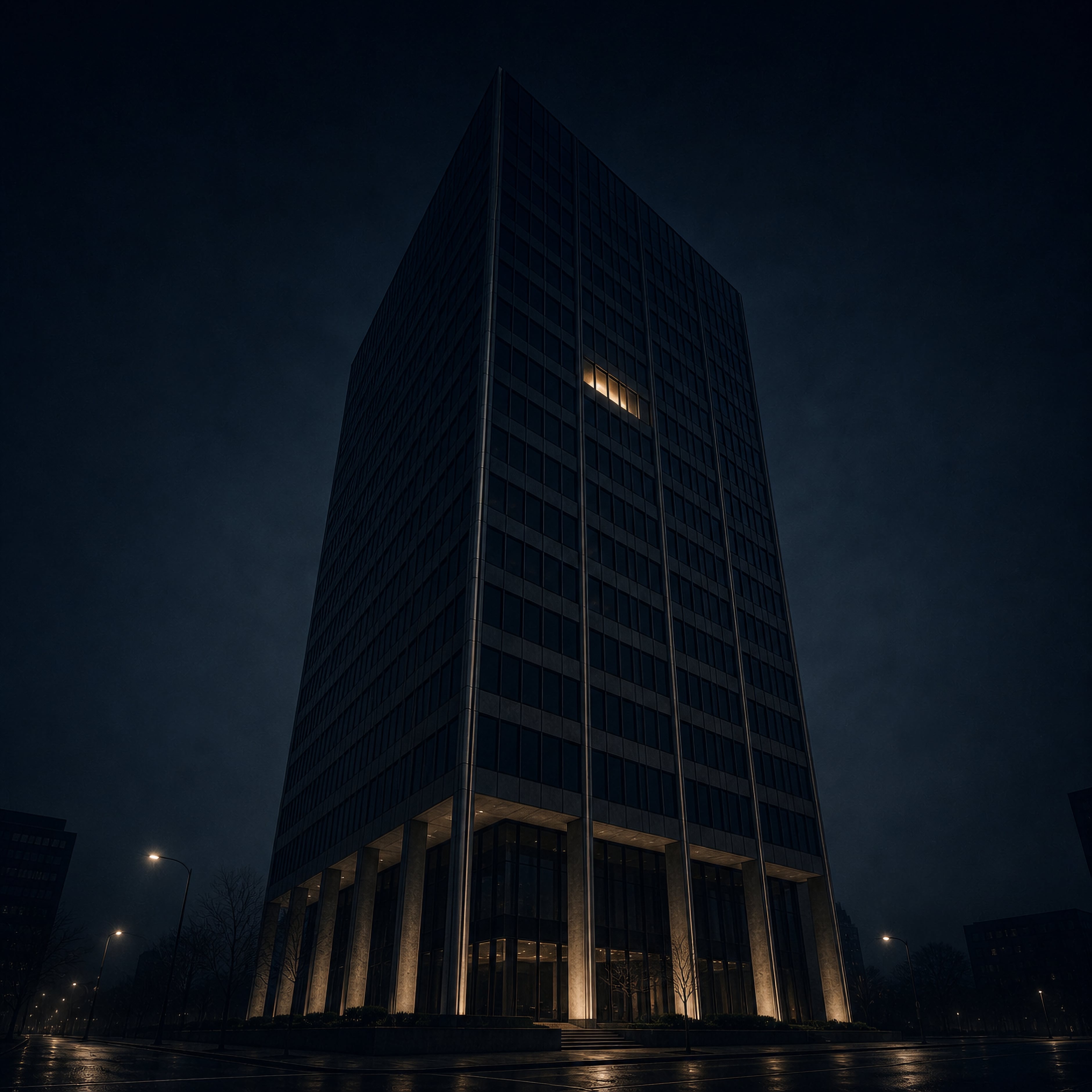
An eighteen-track album, all in the after-hours sub-style. Sequenced as a four-act arc — late afternoon, evening proper, closing time, going home. Distributed across five sub-variations of the after-hours sound to keep the listening experience varied across the runtime.
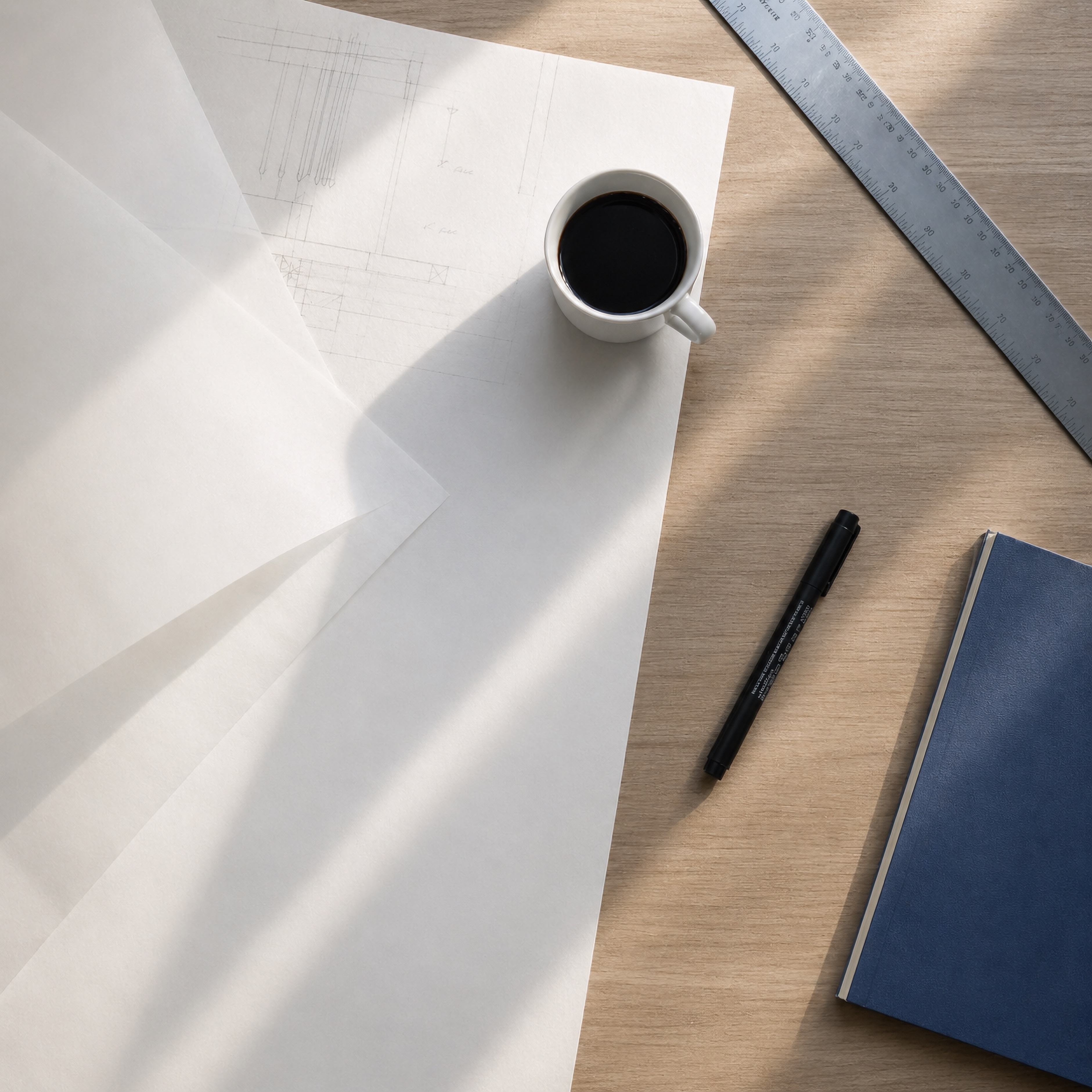
Nine tracks sequenced as a workday arc — morning to late evening. Six drumless morning sub-styles open the EP, and three after-hours tracks close it as the evening exit. The debut release.
02 The Artist
Field Office is two rooms in the same studio at different hours. AI-assisted instrumental, mastered for streaming.
In the morning room — 7am, gray light, someone has just made coffee but isn't drinking it yet, tracing table, mechanical pencil — the music is quiet modern classical. Felt piano, soft pads, a brushed pulse if any. Dry, close, alert.
In the after-hours room — 9pm, the building is mostly empty, the desk lamp is on, the work is winding down — the music shifts to a downtempo nu-jazz feel. Rhodes electric piano, broken beats, jazz chord voicings, a touch of warmth. Inspired by Hefner's Residue — the late-90s/early-2000s London downtempo school.
Both rooms share a brief: a slightly metabolic floor under deep work. The music holds a tempo without demanding attention — but it has shape. Each piece is built to hold up under a focused re-listen, not just to disappear behind one. The goal isn't sonic wallpaper; it's the kind of record you can work to all afternoon, then come back to in the evening and actually hear.
This is music for the work you do alone. Field Office is one of the four 480Studios artists made for the solitary hours — here, the deep-work block, heads-down, in pursuit of something that takes time to build. It's for the people who already know the arc is long and keep showing up for the unglamorous hours anyway. Not to distract you from the work — to make it an hour you look forward to. (Last Pour is the label's one social record, for when the work's done; everything else, including this, is for the grind.)
03 The Sound
Seven sub-styles. Six are fully drumless because percussive transients pull attention during deep work. Only after-hours has rhythm, deliberately positioned as the "winding down" track at the end of the day.
Solo felt piano with a soft pad shadow. No second instrument. The piano carries the entire piece.
Two layered piano voices in slow contrary motion against each other, with a soft pad bed.
Slow modular synth with bell tones, no piano. Sub-bass drone underneath. Sparse and electronic.
Vibraphone or marimba over a sub-bass drone. Sparse — like notes in the margin of a book.
String quartet sketch — two violins, viola, cello — close-miked and dry. No electronics.
A 4-bar piano figure looping with subtle variations. Sub-bass throb every other downbeat as implicit pulse.
The only sub-style with rhythm. Rhodes-led downtempo nu-jazz, broken beats, jazz chord voicings, upright bass. Inspired by Hefner's Residue.
04 Aesthetic Touchstones
Reference points for listeners and curators. The artist sounds like itself, but these are the pole stars.
